



Robotic Milling
An Efficient Method of Robotic Machining
Robotic milling is a dust-free technology for machining welds, edges, and surfaces of metal components using an industrial robot. In certain applications—especially when preparing weld grooves or where high material removal rates are required—the generation of chips instead of fine abrasive dust makes it a suitable alternative to robotic grinding.
While robotic grinding is ideal for final surface finishing and achieving the required surface roughness, robotic milling is primarily used where high removal rates, weld opening, or reduced dust generation in production are key requirements. To achieve optimal results, we cooperate directly with the manufacturer of patented milling discs, Maija Frästechnik GmbH. DEPRAG drive units are specially adapted and optimized for use with Maija milling discs.
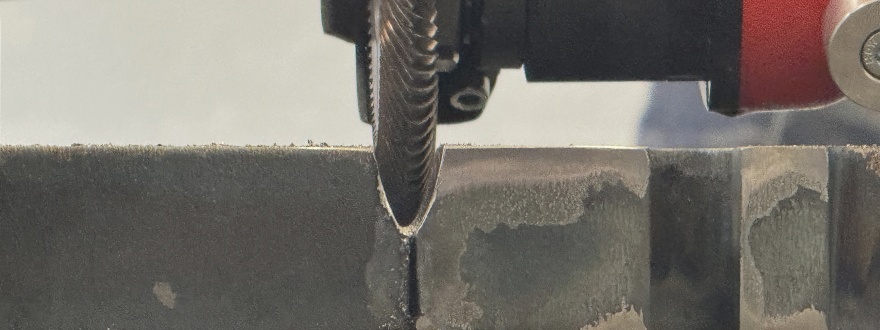
Key Benefits of Robotic Milling
- Higher Productivity
Milling discs enable significantly higher material removal rates compared to conventional grinding. The technology is therefore suitable for applications involving excess material or heavy weld beads. - Consistent Quality
Automated robot control eliminates fluctuations caused by human factors. The result is consistent weld preparation quality and a stable production process. - Health Protection
Unlike grinding, milling does not generate fine abrasive dust but larger chips. - Low Thermal Load on the Material
The material is not exposed to excessive overheating. No structural changes or surface discoloration occur, which is particularly important in weld preparation. - Recyclable Chips
The generated material can be easily recycled, contributing to cleaner and more sustainable operations.
Suitable Materials
- Structural steels
- Stainless steels
- Aluminum and its alloys
- Titanium
- Copper
- Other materials
Typical Applications
- Welding Shops
Preparation of weld grooves and processing of completed welds
- Foundries
Machining of large castings
Differences Between Milling and Grinding
Milling
- Discs with defined cutting edges
- Produces chips instead of dust
- Higher material removal rate
- Longer tool life
- Lower friction = lower temperatures
Typical Use Cases
- Groove preparation before welding
- Opening and cleaning welds
- Machining large castings
- Applications requiring low dust generation
Grinding
- Abrasive discs with grains of varying grit sizes
- High precision
- Lower tool cost
- Suitable for complex geometries
- Various grinding methods (peripheral, face, belt grinding)
Typical Use Cases
- Edge deburring
- Removal of risers and parting lines
- Machining complex shapes
- Weld polishing
We use robotic weld milling (automated milling) for fast and repeatable robotic weld processing. We prepare a technological feasibility study, program the robot trajectory, and ensure complete integration into the robotic workstation.
PDF product catalogue of Maija Frästechnik GmbH.
For more information, please contact our partner directly:
Maija Frästechnik GmbH
info@maija-fraestechnik.de
+49 (0)2333 869 77 05